
COLUMN
03/11/2026
You Might Not Need Kubernetes Yet: A Reality Check Before You Adopt It
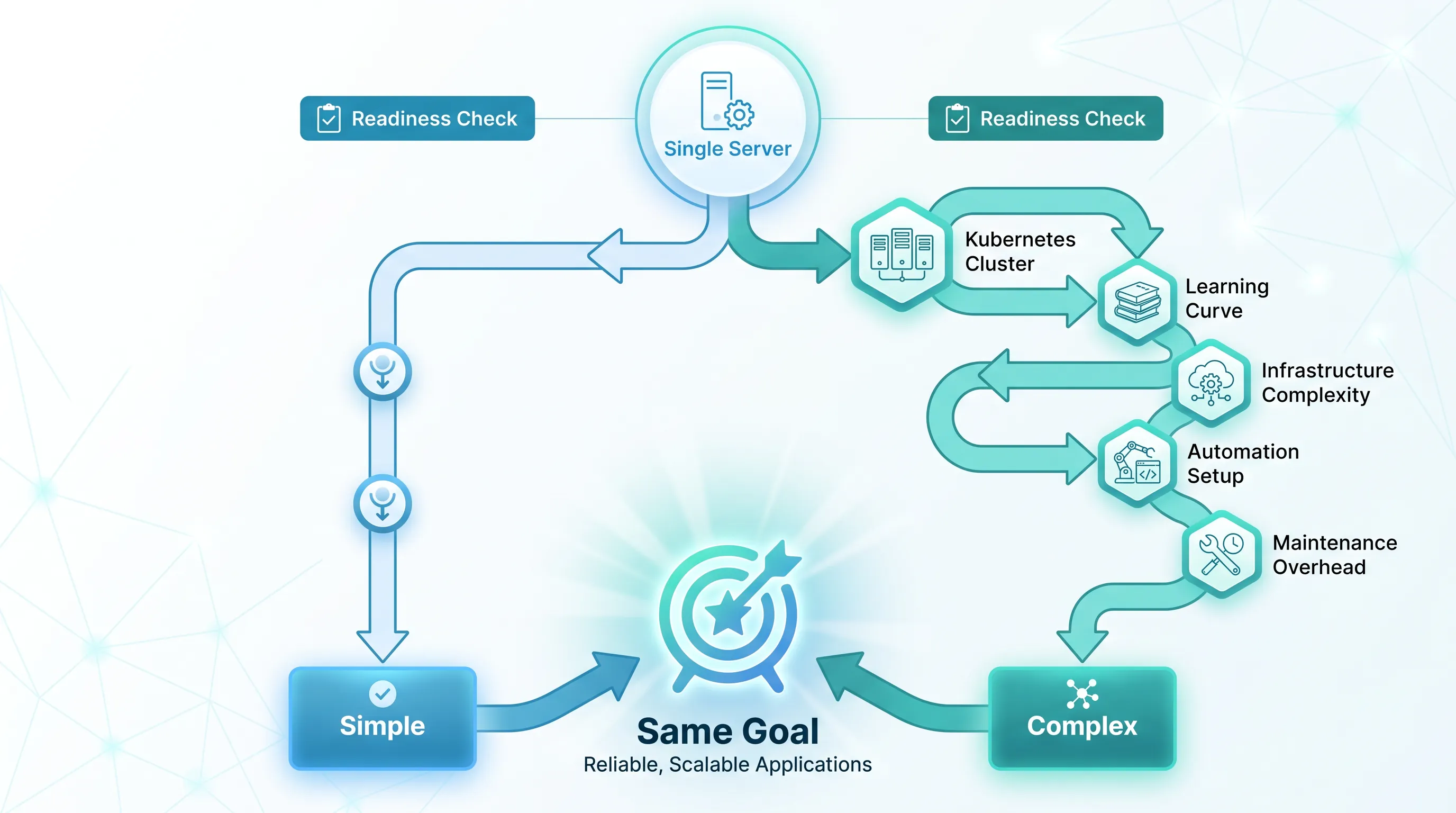
Somewhere in the last few sprint planning meetings, someone said the word "Kubernetes." Maybe it was a new hire who used it at their last job, maybe it was a line in a blog post about scaling, maybe it was a vendor pitch. Now there's a Jira ticket with "Evaluate Kubernetes migration" in the title, and nobody on the team has actually run a cluster in production.
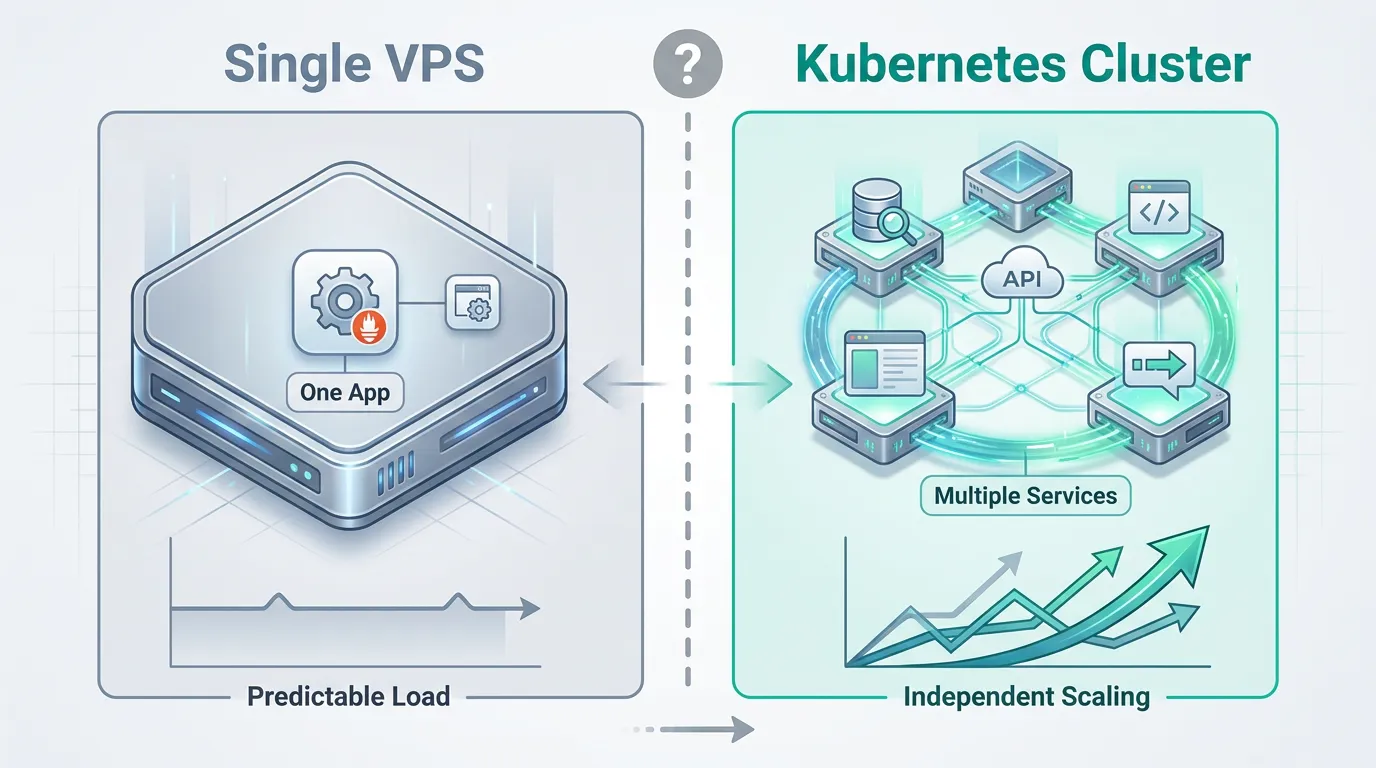
This is the moment to slow down, not speed up. Kubernetes solves real problems — but it solves specific real problems, and adopting it before you have those problems just trades one set of headaches for a more expensive one.
The question isn't "is Kubernetes good," it's "do we have its problem"
Kubernetes exists to answer a narrow set of operational questions: how do you run many instances of many services, keep them healthy without a human watching, and roll out changes without downtime, across infrastructure that might fail at any layer. If your team is running one app on two or three servers, you probably aren't asking those questions yet — you're asking "why did the deploy take down the site" or "why is nobody sure which server has the latest code." Those are real problems, but Kubernetes isn't the first fix for them.
A useful gut check: list the last three production incidents your team had. If they were about deployment consistency, basic health checks, or a server running out of disk, you need better process and maybe containers — not an orchestrator. If they were about a service falling over under load with no automatic recovery, or about needing to run the same stack in five regions with different configs, that's closer to where Kubernetes starts paying for itself.
What "not ready yet" usually looks like
Teams that adopt Kubernetes too early tend to share a few traits, and it's worth checking whether any of them describe you:
- Nobody owns operations full-time. Kubernetes has a learning curve measured in months, not days. If your infrastructure work is "whoever has time this week," the cluster will rot faster than it helps — stale manifests, forgotten resource limits, and nodes nobody remembers provisioning.
- You're running a single application with predictable load. One service, one database, traffic that doesn't spike unpredictably. A process manager and a couple of VMs with a load balancer in front cover this case with a fraction of the moving parts.
- You don't yet have a CI/CD pipeline that builds and ships containers reliably. Kubernetes assumes you already have container images you trust and a way to roll them out. If that pipeline doesn't exist, building it is the actual prerequisite — and it's useful on its own, with or without an orchestrator.
- "We might need to scale a lot" is a hope, not a measurement. Planning for hypothetical scale is how teams end up maintaining Kubernetes YAML for three users and one dog.
None of these are permanent disqualifiers. They're signs that the groundwork — containerization, CI/CD, monitoring, a team member who can own operations — isn't in place yet, and Kubernetes won't build that groundwork for you.
What actually tips the scale toward "yes"
The teams that get real value from Kubernetes usually have at least two of these, not just a hunch:
- Multiple services that need to scale independently. An API that spikes during business hours and a background worker that runs constant batch jobs have different scaling needs. Running them on the same fixed-size server wastes capacity one way or the other.
- A real uptime requirement with a team to back it. If downtime has a cost attached to it — lost revenue, an SLA, a support queue that explodes — self-healing and rolling deployments stop being "nice to have."
- More than one environment that needs to stay consistent. Staging, QA, and production configured by hand drift apart within weeks. Declarative infrastructure keeps them honest, but only if someone is maintaining the declarations.
- A path toward multi-cloud or on-prem flexibility. If being tied to one cloud vendor's proprietary services is a real business risk for you — not a theoretical one — standard Kubernetes is one of the few ways to keep that door open.
If you're weighing option 1 or 2 against the operational cost, it's worth reading a use-case-driven comparison of K3s and full Kubernetes before deciding how much cluster you actually need — a lot of "we need Kubernetes" conversations are really "we need a lighter version of it."
The part nobody puts in the pitch deck: operational cost
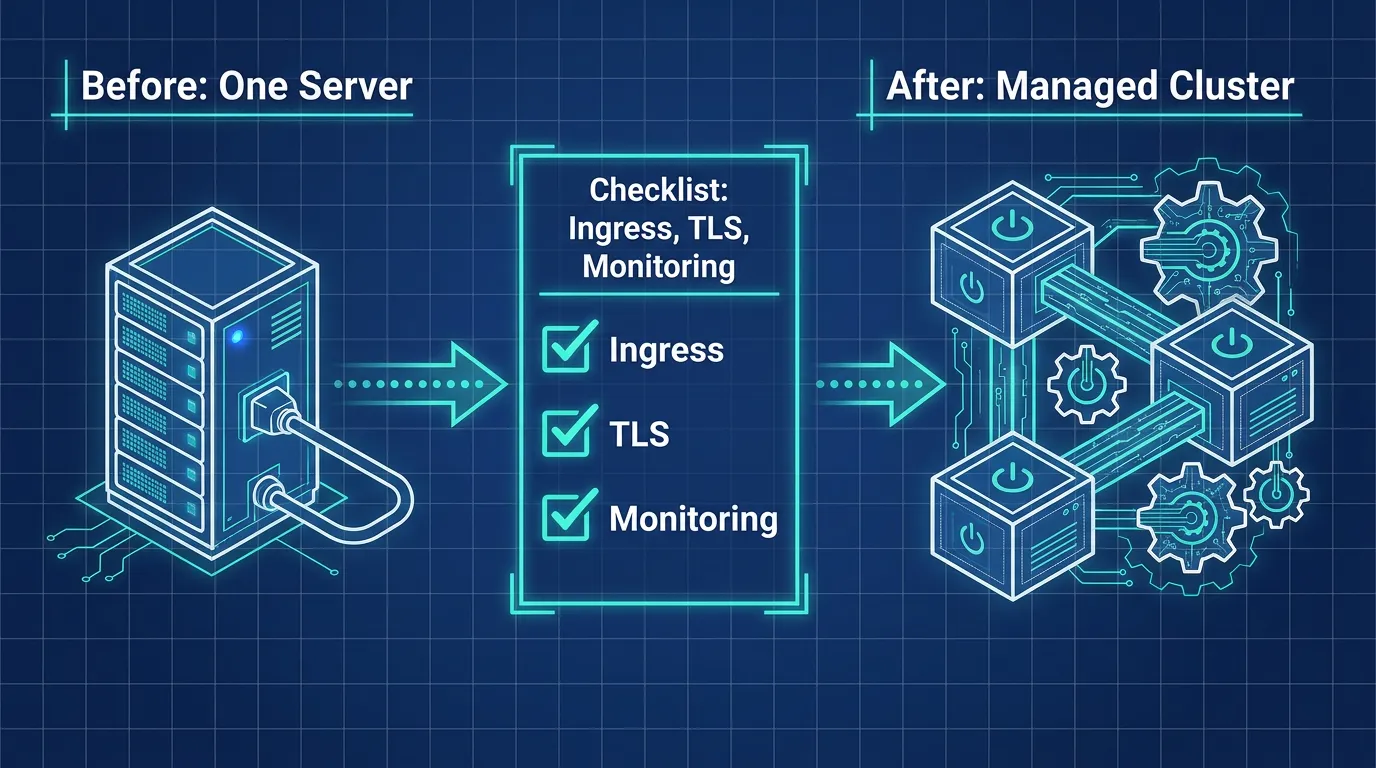
Here's where the "reality check" in the title earns its keep. Even a small, well-run cluster needs ingress and TLS configured, persistent storage sorted out, monitoring and alerting wired up, and someone who understands what happens when a node dies at 2 a.m. None of that is optional — it's the plumbing that makes Kubernetes's promises (self-healing, zero-downtime deploys, easy scaling) actually true instead of theoretical.
Teams that skip this plumbing because "we'll figure it out later" are usually the ones who end up back on a single VPS within a year, except now with a Kubernetes-shaped hole in their budget and timeline. The actual, out-of-pocket cost of managed Kubernetes compared to the DIY version is bigger than most teams expect going in — worth reading through a breakdown of where managed Kubernetes costs actually come from before you commit budget to it.
This is where most teams stall: the application works fine, but self-hosting on raw Kubernetes means someone has to own ingress controllers, certificate renewal, and cluster monitoring before a single new feature ships. Kubo exists for exactly this gap — standard Kubernetes with that plumbing already wired up, closer to the deploy-and-forget workflow teams are used to from platforms like Vercel, without locking you into one vendor's proprietary APIs.
If you decide you do need it, start smaller than you think
Assuming the checklist above points toward "yes, we actually need this" — the next mistake is over-provisioning before you've learned how your own workload behaves on a cluster. Most teams don't need a dozen namespaces and a multi-region setup on day one; they need one well-configured environment that mirrors production closely enough to catch real issues. A good reference for right-sizing this is how many separate environments a small team actually needs to run safely — it's a shorter list than most org charts imply.
Start with the smallest cluster that handles your real traffic pattern, instrument it so you can see what's actually happening, and resist the urge to pre-build for scale you haven't hit yet. Kubernetes rewards teams that grow into it deliberately and punishes teams that jump in because a blog post made it sound inevitable.
The honest answer, most of the time
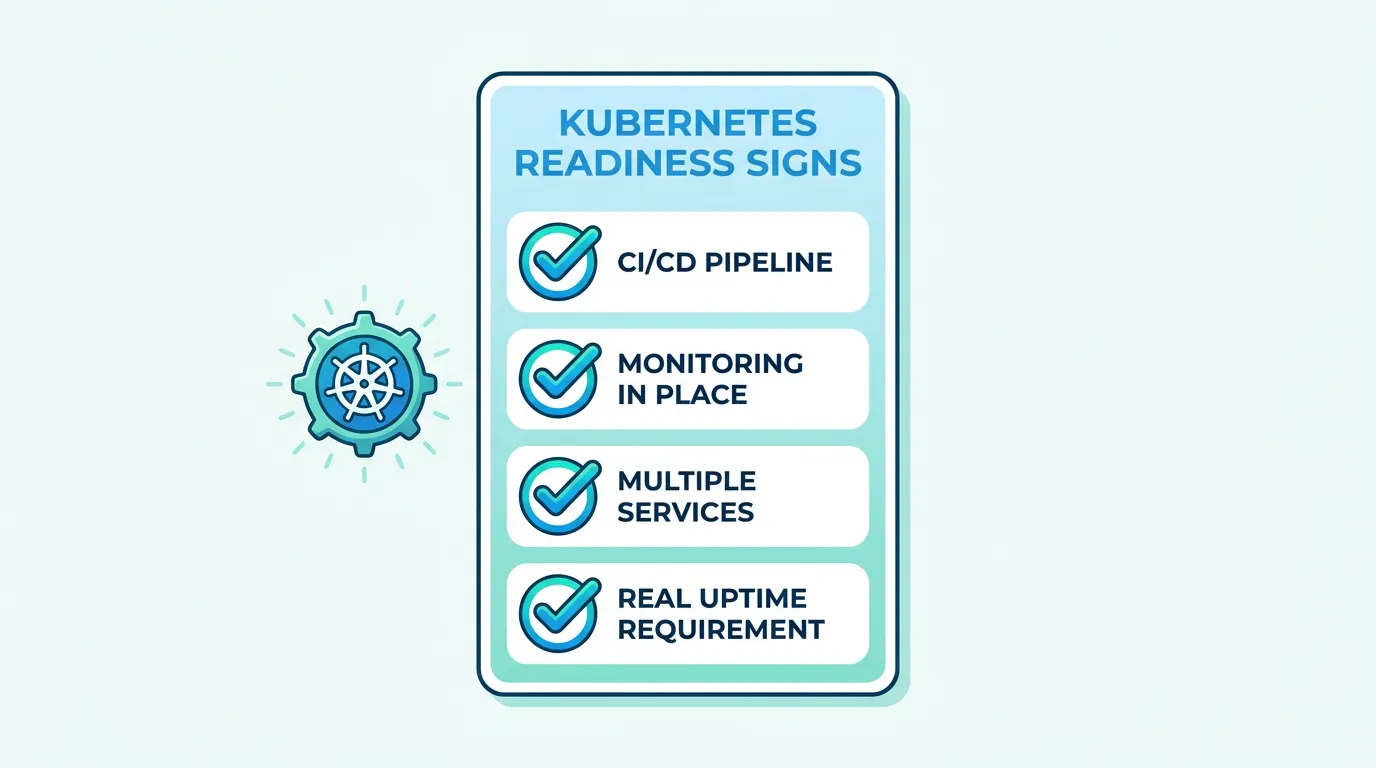
If you're reading this because someone on your team is pushing for Kubernetes and you're not sure whether that's the right call: it's fine to say "not yet." Build the CI/CD pipeline. Containerize the app. Get monitoring and alerting in place. Those are useful regardless of what you run them on, and they're also exactly the prerequisites that make a future Kubernetes migration straightforward instead of chaotic.
And when the checklist above does start matching your situation — multiple services, a real uptime bar, environments that need to stay in sync — you don't have to choose between the complexity of running Kubernetes yourself and the cost of the big managed clouds. For a solo developer or small side project, Kubo's Ashigaru plan starts at ¥8,800/month; most small teams moving off a single VPS land on Ronin at ¥17,600/month, with standard Kubernetes underneath so you're never locked into a proprietary API to get there. Compare the plans once you've confirmed it's actually the right time to move.